

A school year is a long time. It is 180 mornings, thousands of lessons, and more questions asked out loud than anyone could ever count. As the 2025-2026 year closes, we pulled the data on how Scholar was actually used. We want to share it the honest way: not as a pile of numbers, but as a story about what happened inside classrooms.
Because that is the thing about a number like 241,879. On its own, it is just a big figure. What makes it matter is the student behind each one of those interactions, sitting in a normal classroom on a normal school day, working something out.
If you are new here: Scholar Education is the AI infrastructure for special education, built specifically for K-12 schools. BaxterBot gives every student 1:1 academic support inside the normal school day, adjusted to their reading level, accommodations, and language. It delivers IEP and 504 accommodations like text-to-speech automatically. It is COPPA-compliant, education-first AI built for classrooms, not a general-purpose tool pointed at one.
Here is the big picture of what Scholar did this year.
Students Reached for BaxterBot 241,879+ Times
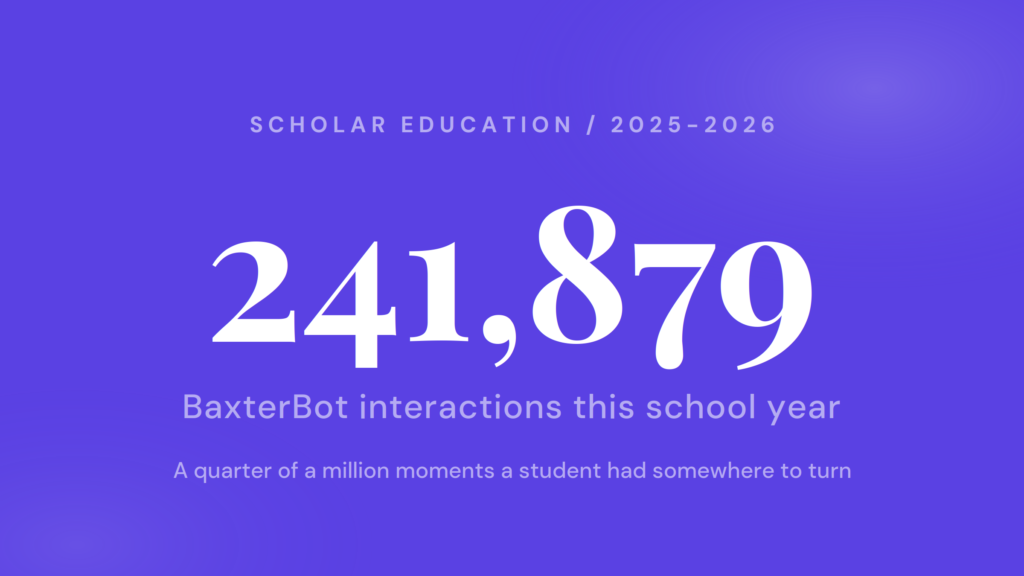
The headline number for the year is 241,879+ BaxterBot interactions: hundreds of thousands of moments when a student had a question and, instead of waiting, had somewhere to turn.
That is what 1:1 academic support is for. In a classroom of thirty, real one-on-one time is rationed. There is one teacher and a room full of students who all need attention at slightly different moments. BaxterBot gives every student 1:1 support of their own, inside the normal school day, for the moments when a teacher cannot be in two places at once.
BaxterBot gives help and scaffolds thinking. He does not hand over answers. And this year, students used that 1:1 support a quarter of a million times.
AI Tools for ESE and Special Education Students: Access That Showed Up
This is the part of the year closest to why Scholar exists.
In 2025-2026, Scholar delivered thousands of accommodations, and the ones that led were the high-impact access accommodations: text-to-speech and speech-to-text support made up the clear majority of everything delivered.
These are not the easy, check-a-box accommodations. These are the supports that decide whether a student can independently engage with a text at all. For a student who used to wait for a teacher or a paraprofessional to read a test aloud, this is the difference between participating and waiting.
One teacher described a student who used the speech-to-text accommodation and became noticeably more engaged, because he no longer had to worry about spelling to get his question out. The barrier between him and the thing he wanted to ask simply went away. That is what an accommodation is supposed to do: not lower the bar, but clear the path to it.
That is the whole mission in one sentence. Access, delivered automatically, so students do not have to wait for it.
Teachers Stayed in Control All Year
Behind every student interaction is a teacher who set it up. Scholar did not replace a single one of them. It gave them time back.
BaxterBot handles the moment when a teacher cannot be everywhere at once. PAWfessor Bruce handles planning and grading so teachers get time back for the human work only they can do. And every accommodation BaxterBot delivers is a teacher’s plan, finally reaching the student it was written for.
That is the model: the teacher stays in charge of the instruction, and Scholar handles the heavy lifting around it.
Where This Fits in the Bigger Picture
If you follow EdTech, you know the conversation shifted this year. The 2026 industry predictions all point the same direction: AI is moving from a classroom novelty to core infrastructure, and the tools that last will be the ones that amplify teachers instead of trying to replace them.
That is the lane Scholar has been in from the start. We did not point a general-purpose AI at a classroom and hope. We built education-first, COPPA-compliant AI for K-12, designed around how schools actually work and the students who need support most. It is the shift everyone in special education is talking about this year: moving from accommodation as an afterthought to independence as the goal. The rest of the field is now moving toward what Scholar already built.
Who Benefits Most
Numbers tell you how much. Teachers tell you who. When we asked the educators who used Scholar all year which of their students benefited most, a clear picture came back, and it was not one kind of student. It was four.
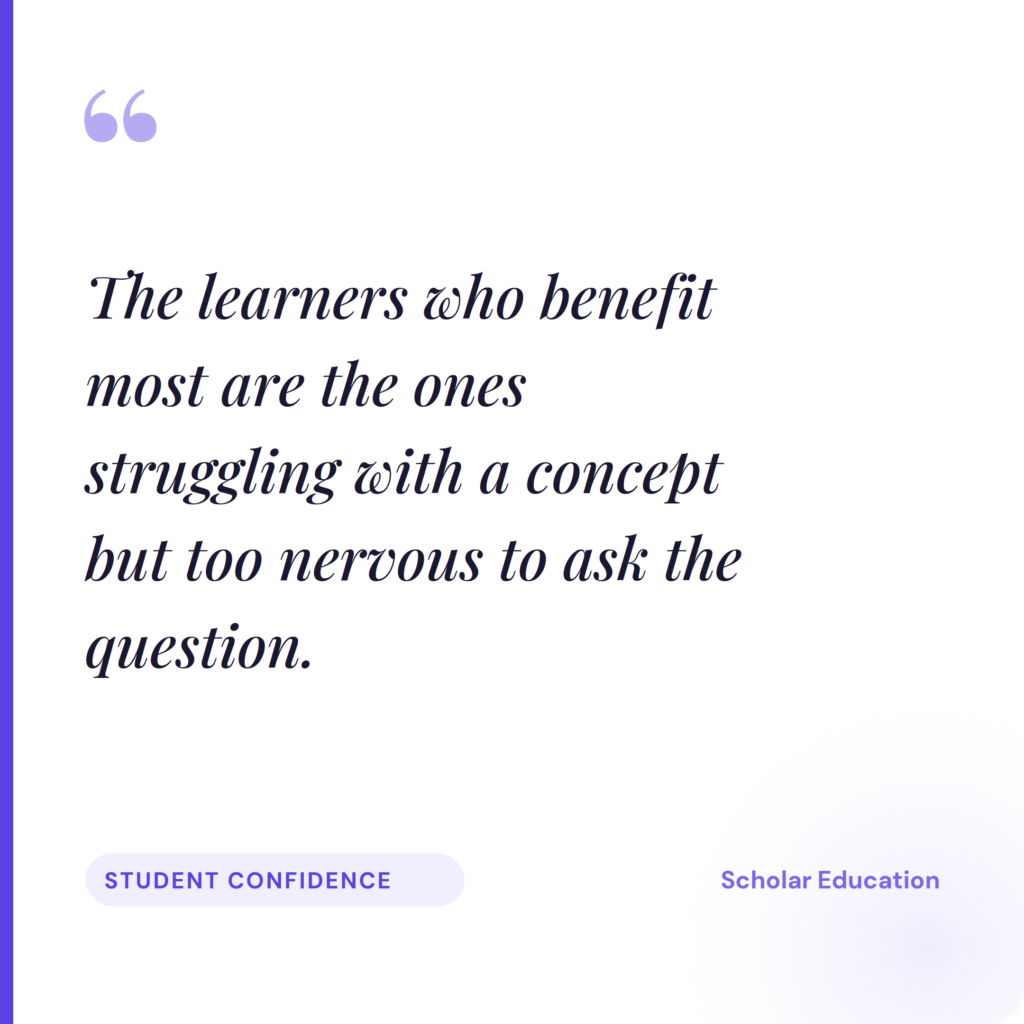
There were the students who get nervous raising a hand. The ones who are quietly stuck on a concept but too afraid to ask the question out loud. For them, BaxterBot is a place to ask without the fear, and to keep asking until it clicks.
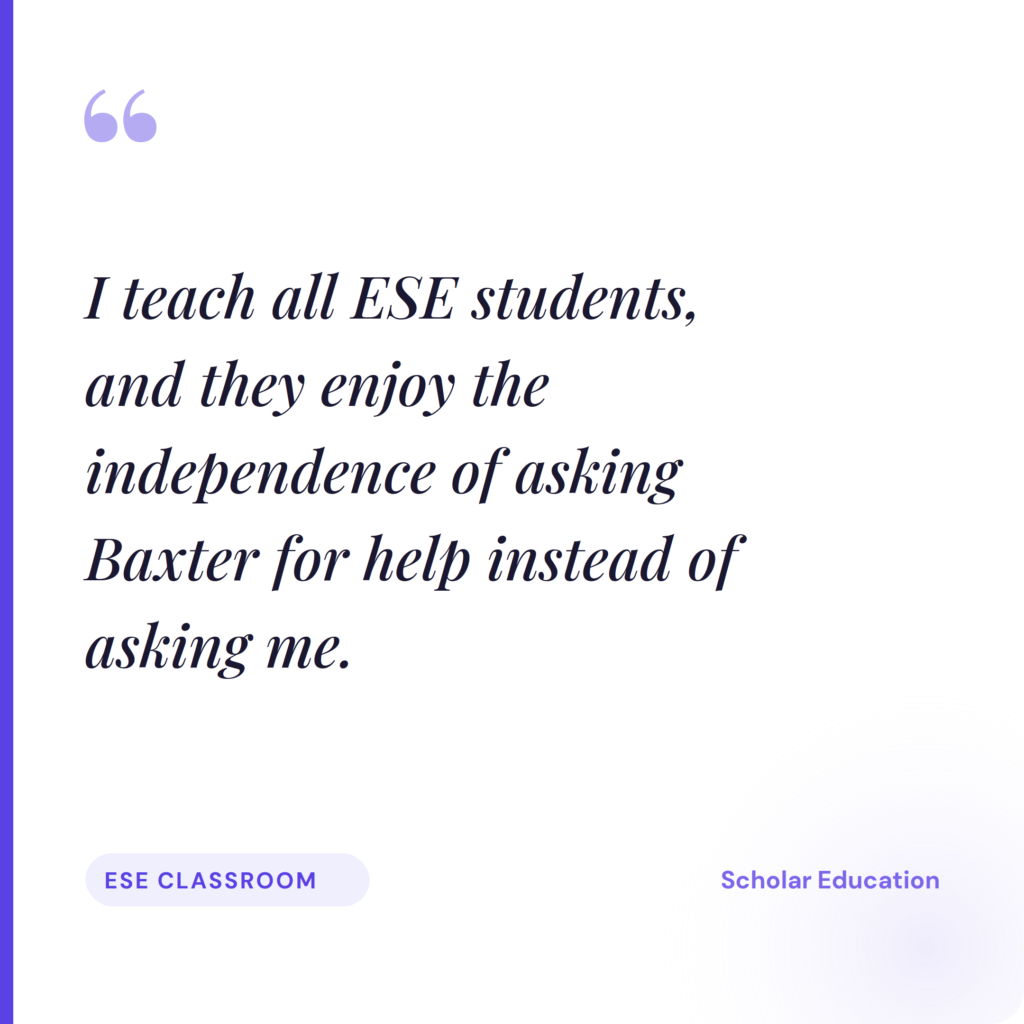
There were the students in ESE classrooms who value their independence. Teachers told us their students like being able to ask BaxterBot for help instead of asking the teacher every time, and that the independence itself is part of what makes it work.
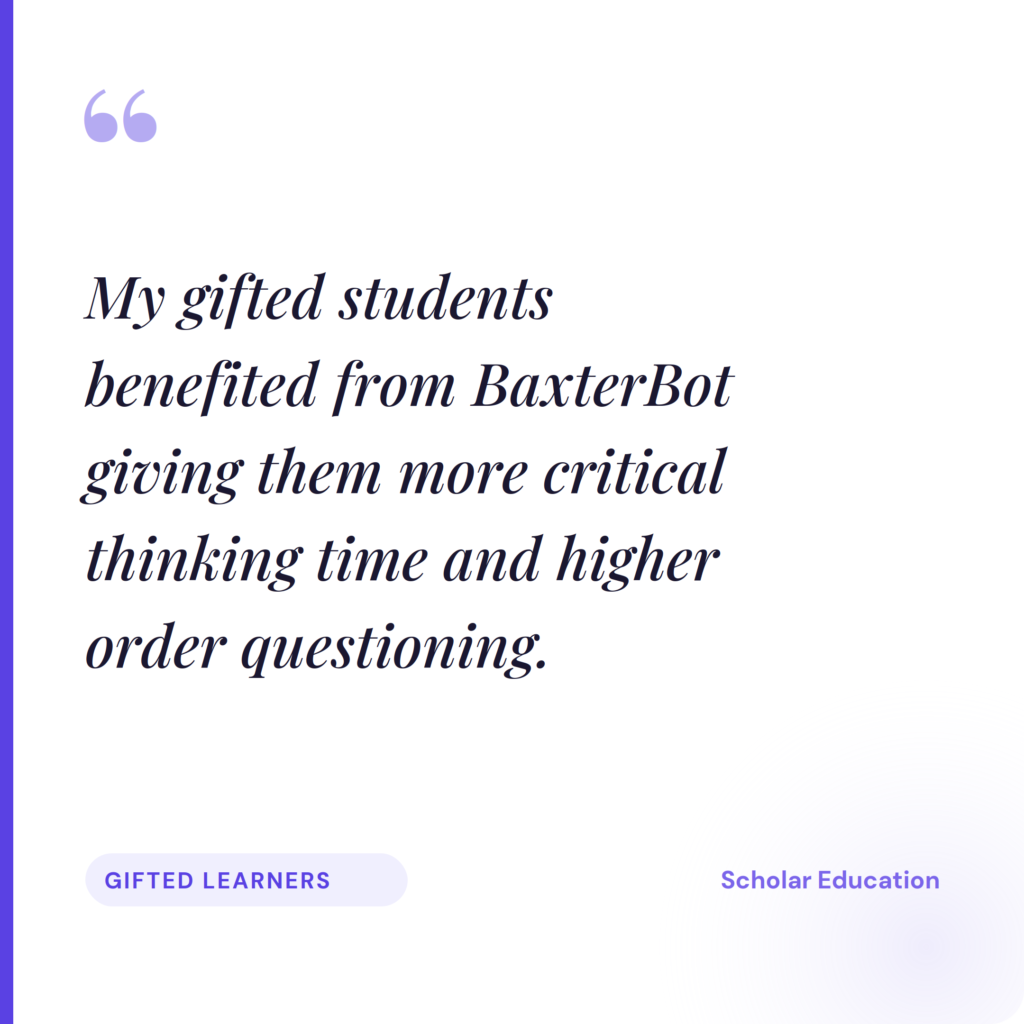
There were the gifted students who finish early and need more. The ones always asking “what do I do now?” For them, BaxterBot is higher-order questioning and more to chew on, in the moments a teacher cannot be everywhere at once.
And there were the students who thrive on routine. The ones who log in first thing, start the day with Scholar, and find a steady, predictable footing that sets the tone for everything after.
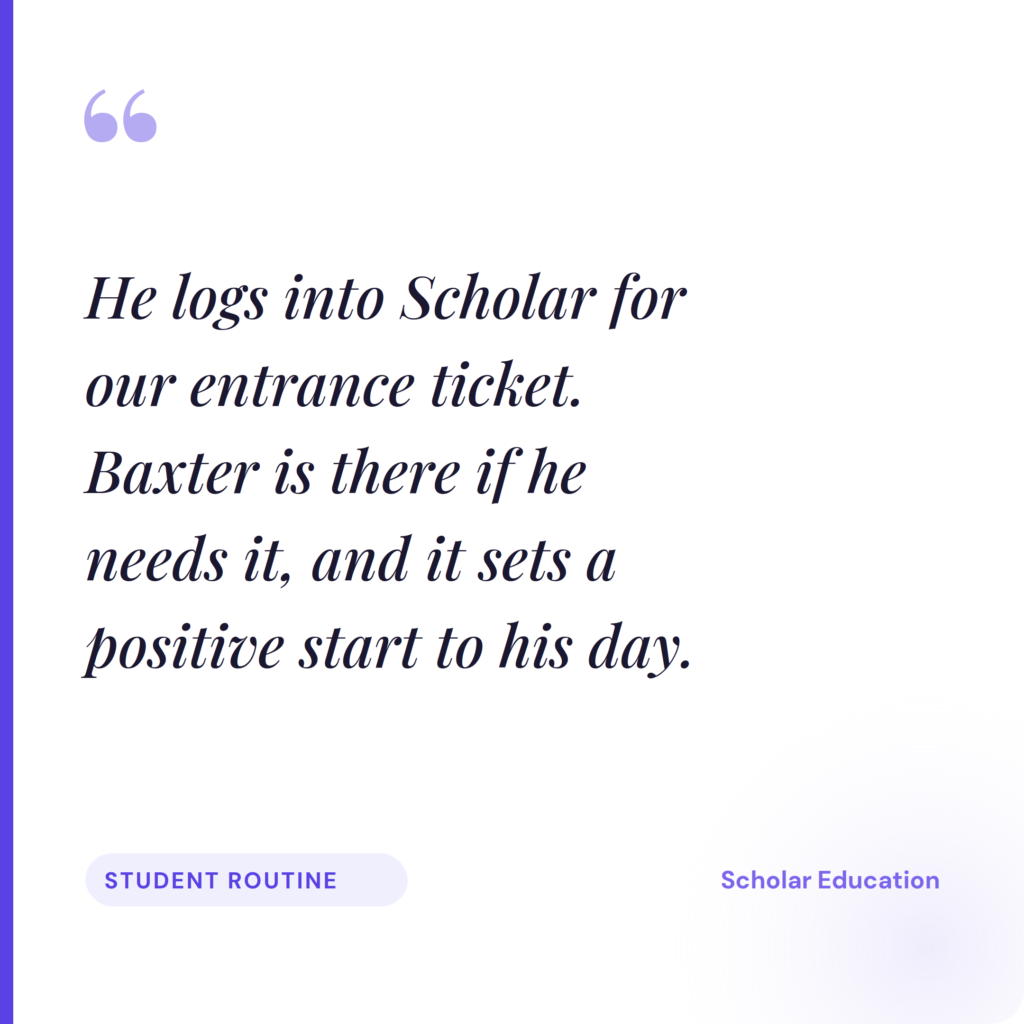
That is the whole point. Not one number, but every kind of student finding a way in. The kid who was afraid to ask, the kid who wanted to do it on their own, the kid who needed more, and the kid who needed a routine. This year, Scholar was there for all of them.
Here’s to a great year, and an even better one ahead.
Want This in Your Classroom Next Year?
If you are a teacher, an ESE or special education coordinator, or a school leader, this is what Scholar does all year long. BaxterBot gives students 1:1 academic support adjusted to their reading level and accommodations. PAWfessor Bruce handles planning, grading, and accommodation tracking so teachers get time back. And IEP and 504 accommodations like text-to-speech get delivered automatically, while teachers stay in control of the instruction the whole way through.
You can see how Scholar works or bring Scholar to your school. We would love to show you what a full year could look like in your classrooms.