
Have you ever wondered what students are actually thinking when they interact with AI in the classroom? At Scholar Education, we’ve been looking at real student questions from grades 2–11—and the results are eye-opening.
BaxterBot isn’t just a tool for answers—it’s a window into student thinking. By adapting to each learner’s grade level, reading ability, and individual needs, BaxterBot provides personalized 1:1 support that helps students get the guidance they need while giving teachers real-time insights into where their students are succeeding—and where they might need extra help.
A Window Into Student Thinking
The questions students ask show curiosity, confusion, and the unique ways they process information. Some examples from recent interactions include:
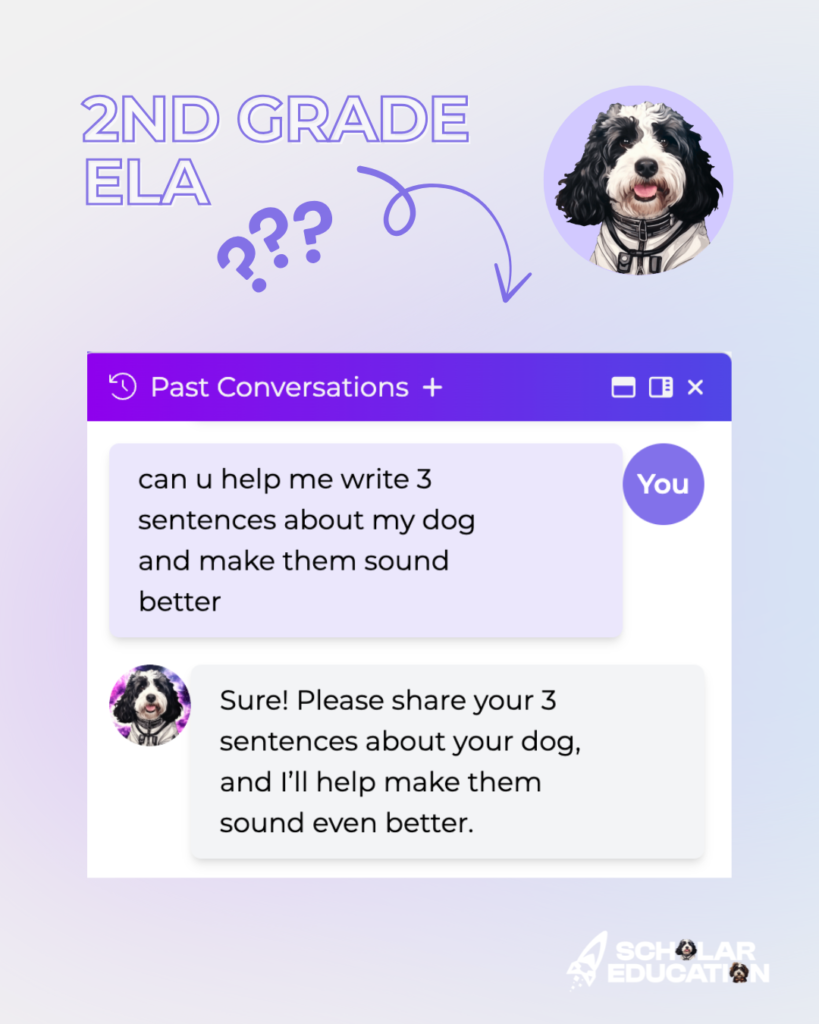
- Grade 2 (ELA): “can u help me write 3 sentences about my dog and make them sound better”
- Grade 3 (Math): “i dont get how to do 247 + 389 can u show me step by step pls”
- Grade 4 (Science): “what is the water cycle again I forgot and what does evaporation mean”
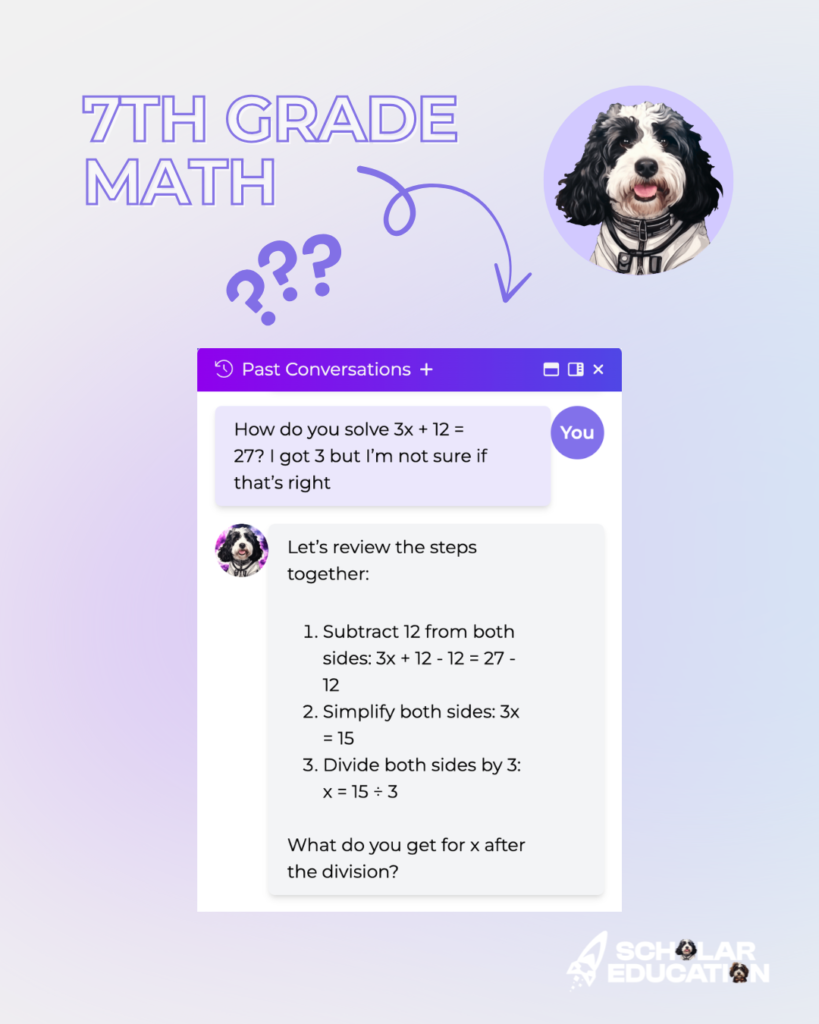
- Grade 7 (Math): “How do you solve 3x + 12 = 27? I got 3 but I’m not sure if that’s right”
- Grade 10 (World History): “I know World War I started with the Archduke, but why did that lead to a bigger war?”
These questions reveal what students are thinking at that exact moment—what confuses them, what excites them, and what skills they’re trying to build.
How BaxterBot Differentiates for Each Learner
BaxterBot isn’t one-size-fits-all. BaxterBot helps teachers differentiate instruction automatically. It adjusts responses based on:
- Grade level: ensuring questions and explanations are age-appropriate
- Reading level: delivering responses that students can understand and act on, differentiate based on their latest reading level
- Individual needs: providing extra scaffolding, prompts, or guidance where students struggle
This approach means every student receives personalized support. For teachers, it creates a real-time window into student learning without waiting for an assignment or test.
The Benefits for Teachers
Traditionally, differentiating for every student requires significant planning time. BaxterBot does this automatically in the moment, giving every student support without adding to a teacher’s workload. Using BaxterBot insights in your classroom helps you:
- Understand how students are thinking and where gaps exist
- Identify common misconceptions or skill gaps across students
- Plan targeted lessons, interventions, or group discussions
- Support each student with personalized, actionable guidance
By looking at real student questions, teachers can better anticipate learning needs and create experiences that meet students exactly where they are.
Putting Insights into Action
Here are a few ways teachers can leverage BaxterBot insights:
- Review conversation themes regularly: see patterns and common questions
- Integrate into lessons: use real questions as discussion starters or mini-lessons
- Encourage follow-ups: help students explore concepts deeper
- Plan targeted support: focus interventions on areas where students need 1:1 guidance
Teachers who regularly use BaxterBot insights can proactively address learning gaps and ensure students feel supported every step of the way.
How often should students be using BaxterBot? Our research-backed recommendation is to incorporate BaxterBot into the classroom 2-3 times per week to see the biggest impact.
Every question a student asks is a window into their learning. With BaxterBot, teachers can see what students are curious about, where they struggle, and how best to provide personalized support.
Bring Scholar and BaxterBot to your school for free and discover how real-time insights can help you deliver tailored 1:1 support for every student. Click here to get started.