
As teachers head into midterms, review season, and the final push of the semester, many are looking for ways to help students stay on track without adding more to their plates. At Scholar, we recently introduced a clear, research-aligned guideline: aim for three short BaxterBot sessions per week to build stronger retention, reinforce skills, and give students the individualized support they need.
And now—new research suggests this approach is right on target.
A recent study highlighted in Forbes found that AI-assisted human tutoring is just as effective as expert human tutoring alone. In real classrooms across five UK high schools, tutors who used AI-generated guidance were able to match the learning outcomes of human-only tutors. In other words, AI didn’t replace teachers — it amplified their impact.
This emerging research directly supports the way BaxterBot is used inside Scholar to accelerate learning, strengthen student confidence, and scale 1:1 support across classrooms.
What the Research Means for Classrooms and Districts
For decades, 1:1 tutoring has been the gold standard for improving learning outcomes. But it’s never been scalable — until now. The study showed that AI-supported interactions helped tutors serve more students while maintaining high-quality instruction.
This aligns directly with Scholar’s approach to BaxterBot.
1. AI + Teacher Guidance = Efficient, High-Quality Practice
The research mirrors what’s happening in classrooms using BaxterBot today. AI handles guided practice, feedback, and skill checks, while teachers guide how, when, and why students use the tool.
Instead of repeating the same explanations or trying to reach every student at once, teachers can rely on BaxterBot to provide instant, individualized support — freeing them to lead small groups, conference with students, or monitor progress more effectively.
2. Short BaxterBot Sessions Replicate the Benefits of Tutoring
One of the most important findings from the research is that short, frequent interactions with AI-supported tutoring drive learning gains. That’s why Scholar recommends three short BaxterBot sessions each week.
These targeted 1:1 sessions help students:
- reinforce skills
- correct misconceptions
- receive immediate feedback
- build confidence through bite-sized success
All without increasing teacher workload.
Just a few minutes of intentional BaxterBot practice can have outsized impact — especially during midterms, test prep, and times when students need repeated exposure to key skills.
3. Smarter Feedback, Faster Learning
One reason AI-assisted tutoring works is speed. Students don’t wait for the teacher to reach them. BaxterBot gives instant feedback, clarifications, and explanations the moment students need them, which prevents frustration and accelerates mastery.
Instead of spending instructional minutes stuck, guessing, or moving on with misconceptions, students stay engaged and supported — and teachers can see exactly where help is needed.
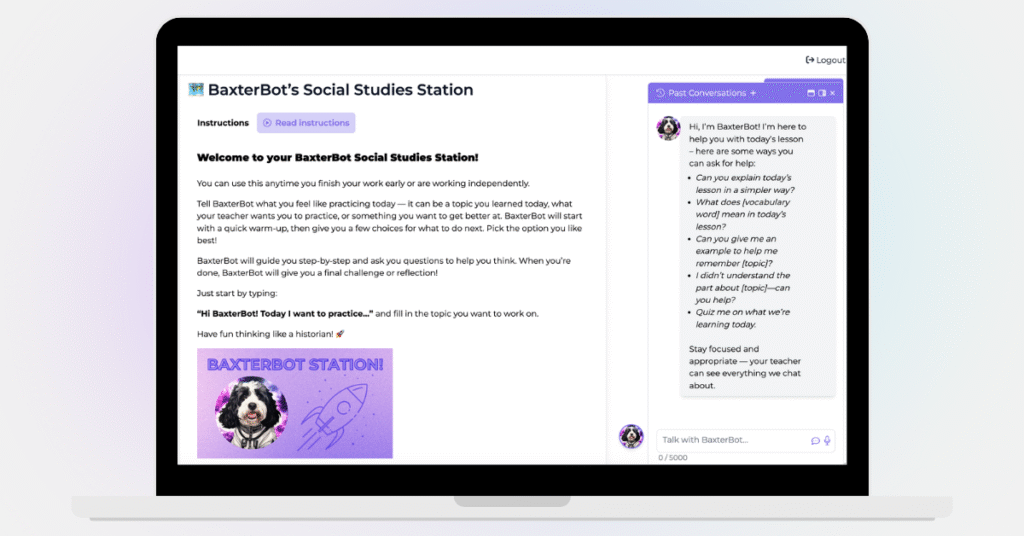
See BaxterBot in Action: 5th Grade Social Studies Station Example
Want to see how a BaxterBot session fits into a real classroom? We’re showcasing a new example of a 5th grade social studies BaxterBot station in a video below!
In the video (linked below), you’ll see:
- How the BaxterBot station is structured
- What the experience is like for students
- How students receive 1:1 personalized support
This model illustrates what the Forbes research describes: AI tools helping teachers reach more students, more effectively, in the same amount of time.
How Teachers Can Easily Plan Weekly BaxterBot Sessions
Short, intentional BaxterBot sessions fit into any classroom schedule. Aim for three BaxterBot sessions a week or about 20-30 minutes total. Here are simple ways to build them into your routine:
1. Warm-Up Review (5–10 minutes)
Use a BaxterBot station to target specific standards or spiral skills at the start of a lesson block.
2. Mid-Lesson Check for Understanding (5–10 minutes)
Have students explain their thinking or work through one practice item with real-time feedback.
3. Independent Practice (5–10 minutes)
While teachers run small groups, BaxterBot provides guided support to students working independently.
4. Exit Tickets (5–10 minutes)
Students end the week with a quick reflection or skill check powered by BaxterBot.
These small routines help teachers gather better insight, support more students, and reduce time spent reteaching the same skills.
A Better Kind of Screen Time
Teachers and families often worry about more screen time. BaxterBot is not passive screen time — it’s active, guided learning that shortens the time students spend stuck, confused, or disengaged.
These short sessions strengthen retention, boost confidence, and give teachers better insight into student needs.
Why Three BaxterBot Sessions a Week Strengthen Retention
The research is clear: students retain more when they practice skills in frequent, shorter bursts. Three BaxterBot sessions a week create that rhythm — regular reinforcement, immediate feedback, and repeated opportunities to revisit key skills.
It’s a simple routine that boosts retention without adding more work for teachers.
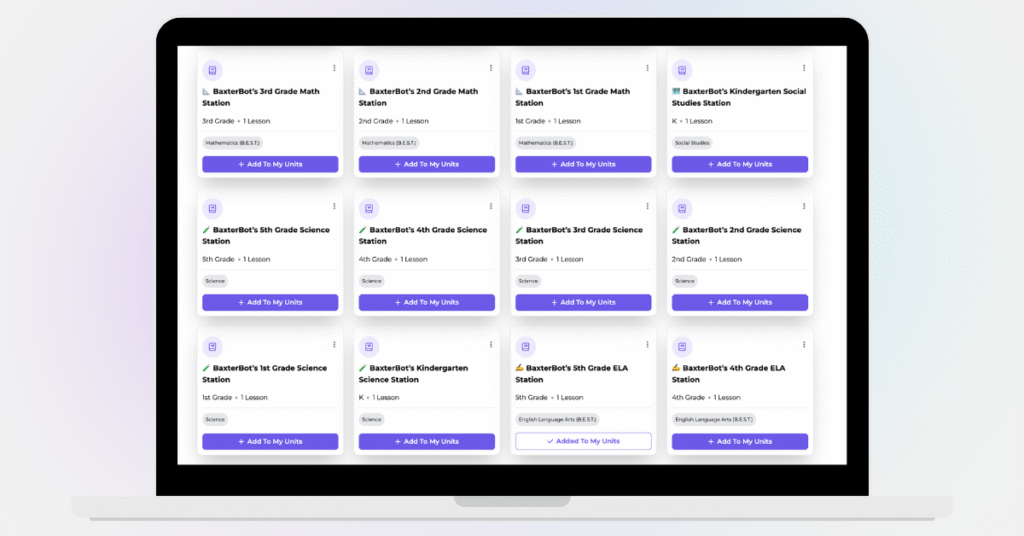
To make it even easier, the Scholar Library includes ready-to-use BaxterBot lessons across all subjects and grade levels, including the 5th grade example featured in the video.
Interested in bringing BaxterBot to your school or district?
Reach out to our team to learn more about pilot opportunities and implementation support.